
Congratulations, you are almost to the finish line! You are on mile 18 out of the 26.2-mile marathon, which means that you are almost there.
In this trimester, your baby is growing more than ever, which means that your body needs more nutrients and energy during this time.
The goal right now is to:
- Support fetal growth and development
- Meet increasing nutrient needs
- Support balanced blood sugar
- Prepare for labor
How much to eat in the third trimester
In the third trimester, calorie needs increase. Instead of calculating a specific number of extra calories, we recommend following your hunger cues – your body knows best. Tracking or counting calories is not necessary.
Focus on:
- Eating regular meals and snacks (every 3-4 hours)
- Building meals/snacks with protein, fat, fiber, and flavor
- Eating until you feel comfortably satisfied
- Prioritizing nutrient-dense choices most of the time
Your intake may still vary day to day. That’s expected. The most important thing is to tune into your body and follow its cues.
Common Third Trimester Symptoms (and What May Help)
During the third trimester, hormonal changes and your baby’s rapid growth can lead to a variety of physical symptoms. Many of the symptoms below are common. Small nutrition and lifestyle habits can often help make them more manageable.
Heartburn or Reflux
- Eat smaller, more frequent meals
- Avoid lying down right after eating
- Limit very spicy, greasy, or acidic foods if they tend to trigger symptoms
- Try digestive enzymes
Go to the heartburn guide.
Constipation
- Increase fiber gradually from foods like berries, broccoli, chia seeds, and beans
- Stay well hydrated throughout the day (add minerals!)
- Gentle daily movement, like walking and yoga
Go to the constipation guide.
Swelling (Feet & Ankles)
- Stay hydrated
- Increase potassium-rich foods
- Gentle walking or movement throughout the day
- Elevate your feet when possible
Go to the swelling guide.
Feeling Full Fast
- Eat small, more frequent meals
- Separate liquids from solids: try not to drink too much while you eat, especially carbonated beverages
- Try setting an alarm on your phone for every 3 hours to eat something
- Sip on a protein shake throughout the day
The 3 Foundations That Matter Most
These are the top three things we want you to focus on first.
1. Stay hydrated
Why it matters:
Blood volume expands significantly during the third trimester. Adequate hydration supports circulation and digestion, helps maintain energy levels, and can reduce constipation and headaches.
Start here:
- Aim for pale yellow urine most of the day
- Prioritize beverages low in added sugar when possible: water, sparkling water, electrolytes, coconut water, soups, smoothies, tea, or milk
- Add a daily mineral mocktail (or simply coconut water) to support hydration needs and increased mineral needs
Explore more:
→ Tea
2. Quality Fats
Why it matters:
Quality fats play an important role in supporting both you and your baby. Certain fats, especially omega-3s like DHA, help to develop your baby’s brain, eye, and nervous system development (1).
Fats also support your health by helping regulate hormones, keeping you fuller for longer, supporting balanced blood sugar, and helping your body absorb important fat-soluble vitamins like vitamins A, D, E, and K (2).
Fats to include regularly:
- Fatty fish like salmon, sardines, and trout
- Meat
- Full-fat dairy
- Avocado
- Coconut
- Nuts and nut butters
- Seeds like chia seeds or pumpkin seeds
- Olive oil
Aim for 1-2 sources of fat in every meal.
Explore more:
→ Omega 3
→ Fats
3. Essential Minerals
Minerals help support both your health and your baby’s rapid growth during the third trimester. They play important roles in bone development, oxygen transport, muscle function, and fluid balance (3).
Key minerals to prioritize include:
- Iron: supports increased blood volume and oxygen delivery to you and your baby
- Calcium: helps build your baby’s bones and teeth. Pairing with a vitamin D source helps your body absorb and use calcium more efficiently.
- Magnesium: supports muscle function, blood flow, and sleep
- Potassium: helps regulate fluid balance and nerve function
- Sodium: helps regulate fluid levels, electrolyte balance, and cellular activity
Getting enough of these minerals may also help support energy levels and reduce symptoms such as fatigue and muscle cramps (4).
Start here:
- Eat a variety of whole foods like fruits, vegetables, beans, whole grains, nuts, and seeds
- Include iron-rich foods such as red meat, poultry, beans, lentils, tofu, and cooked shellfish daily
- Add calcium-rich foods like dairy, yogurt, fortified plant milks, or leafy greens
- Add magnesium-rich foods such as avocado, black beans, almonds, and spinach
- Add potassium-rich foods such as potatoes, citrus, carrots, and bananas
- Do not avoid whole salty foods (like olives, cheese, pickles, etc.) or salting your food when cooking
- Continue taking your prenatal vitamin to help fill nutrient gaps
Explore more:
→ Calcium
→ Iron
What to avoid
There is still no giant list of foods to “avoid.” The foods to avoid are much smaller than you might think.
Food safety
- Basic food safety principles include handwashing, keeping the kitchen clean, cooking foods to appropriate internal temperatures, and thoroughly washing all produce.
- The foods that cause the most foodborne illness outbreaks are pre-cut and individually packaged items, raw shellfish, produce, and raw sprouts.
Explore more:
→ Food Safety in Pregnancy
Fish
- Avoid high mercury fish
- Avoid raw shellfish
Caffeine
- Avoid excessive intake
- If iron is an issue, drink it away from meals
- For most, 1 cup or 150 mg of caffeine per day is okay
Explore more:
Third Trimester Supplements
Everyone:
Prenatal vitamin
To consider (based on labs, diet, or symptoms):
- Omega-3s – if you do not eat fish or only eat white fish
- Vitamin D – if you’ve tested, and your levels are low
- Probiotics – if you do not eat fermented foods
- Magnesium – if your prenatal vitamin has little to no magnesium, or if you have specific symptoms that warrant more magnesium
- Iron – if you’ve tested, and your levels are low
- Inositol – if you have PCOS or gestational diabetes
- Protein Powder – if you need support meeting your daily protein needs
Using Recipes & Top Foods in the App
- Recipes tagged “Third Trimester” are designed to support baby’s development and higher nutrient needs.
- At the top of each trimester learning hub, you’ll find the Top Foods for that trimester — use these as inspiration, not necessarily a “checklist.”
Start with what sounds good today, then build from there.
Gestational Diabetes
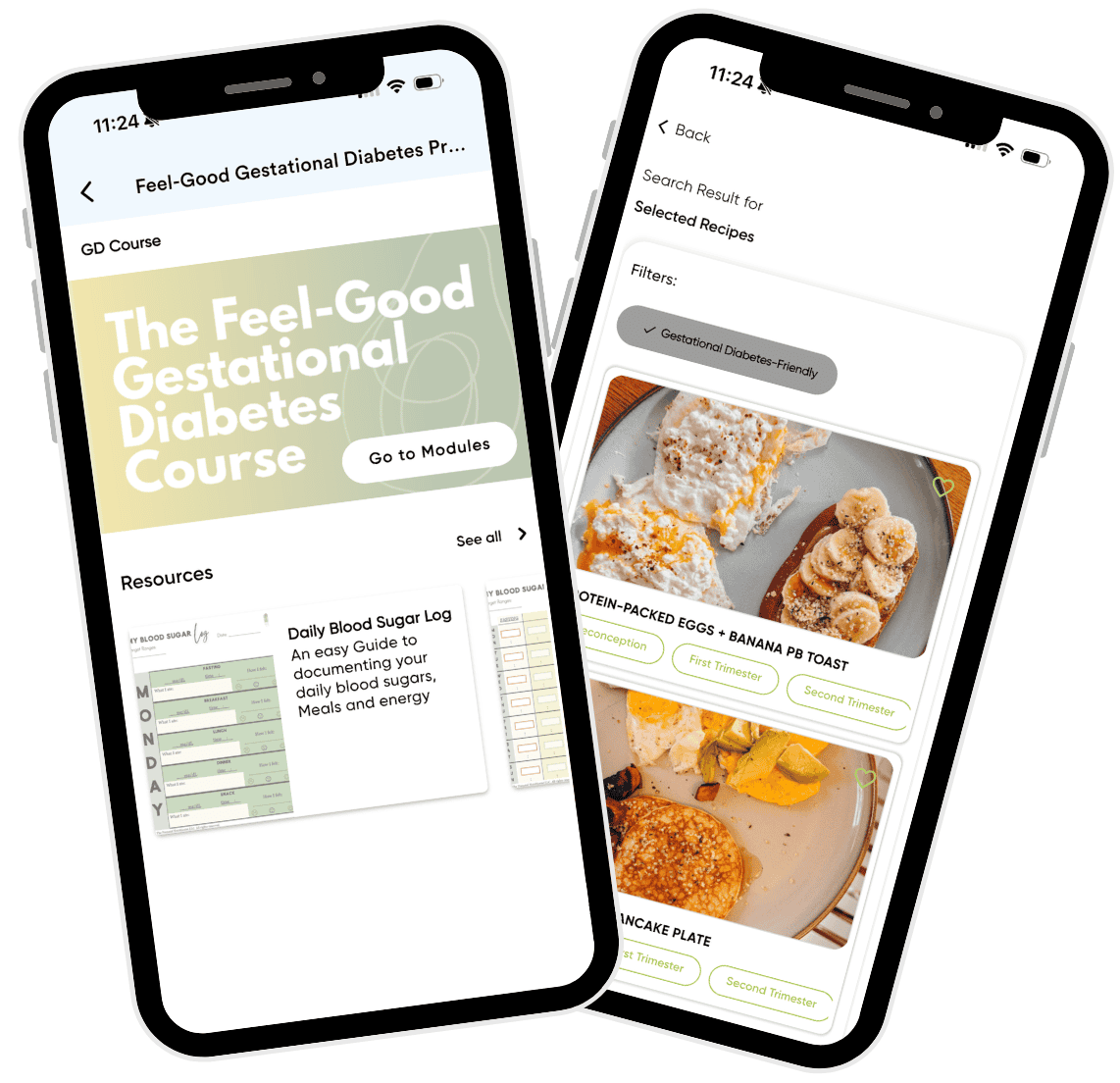
- Make sure your meal plan is set to “gestational diabetes friendly.” Click the three lines at the top right corner of the app, go to Profile, then under Your Dietary Preferences, add “Gestational Diabetes-friendly.”
- Under the “Library” home screen, Learn By Stage, you will see a “gestational diabetes” specific learning hub.
- Here you will also find our full “GD course” linked at the top. This is a 5 modules self-paced course.
- Under the “Recipes” home screen, click “search recipes” and scroll down to “nutrition related”, select “gestational diabetes friendly.”
Preparing for Birth
During the final month of pregnancy, small habits and preparations can help support your body as it gets ready for labor and delivery.
Helpful ideas:
- Keep simple, nourishing foods on hand (soups, overnight oats, hard-boiled eggs, etc.)
- Stay hydrated and continue prioritizing regular meals and snacks
Explore more:
Dates
Dates contain fiber and antioxidants, which can support digestion and your overall health. They are widely touted to help with labor when eaten consistently in the third trimester, and there is some research to support this notion (5). Importantly, dates do not ‘put you into labor’; they may help prepare your body for labor.
Dates are a great option to eat before, during, and even after pregnancy.
According to some studies and reviews, dates can:
- Increase uterine contractions
- Facilitate delivery by decreasing time spent in labor and inducing cervical dilation (6)
- Reduce the need for inductions
- Provide your body with the energy it needs (7)
Dates are high in carbohydrates, so even if you do not have gestational diabetes, it is important to pair them with protein and fat. Like smearing nut butter and sprinkling hemp seeds on top, or adding to a smoothie with Greek yogurt, berries, and spinach, for example.
Go to the guide on dates.
Red Raspberry Leaf Tea
Red raspberry leaf tea has been traditionally used in Chinese medicine to support menstrual health, pregnancy, labor, and postpartum recovery. It contains high amounts of antioxidants and polyphenols, which can help reduce cell damage and prevent disease (8).
Of note, it does contain tannins, which may decrease iron absorption (11).
What does the research say about labor prep?
- Consuming it during the final weeks of pregnancy may shorten the second stage of labor (9)
- Most research supports that there is no significant difference in the length of gestation for those who did vs. did not consume red raspberry leaf tea during pregnancy (10)
- Research suggests that drinking red raspberry leaf tea can support urinary recovery and hydration after delivery, although the evidence is limited (9).
While we do have research, it is still limited in pregnant individuals. Because of this, consume red raspberry leaf tea in moderation (1 to 3 cups/day) and avoid concentrated extracts.
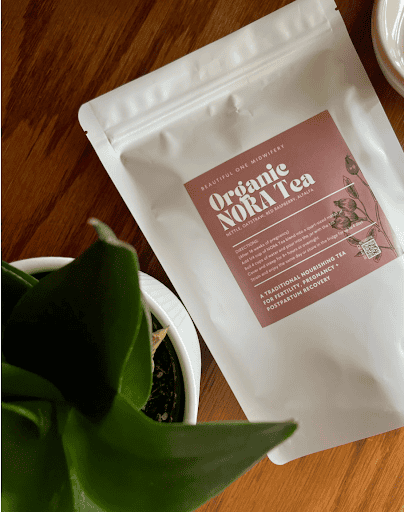
We recommend using NORA tea starting as early as the 2nd trimester (use code RYANN10)!
Go to the full guide to red raspberry leaf tea.
When to Get Help
Talk to your provider if:
- You are extremely fatigued despite adequate intake
- You can’t stop eating ice (get your iron checked)
- You want to eat non-food items (Pica)
- You experience ongoing nausea and vomiting
- You have a headache that won’t go away
- You have swelling accompanied by a headache
- You have questions or need support
The Big Picture Reminder
The third trimester can be really hard and seem very long. Your job now is to support your body’s increased nutrient needs by eating balanced, frequent meals, resting when you need to, and staying hydrated. You’ve got this!
Questions about your third trimester? Need additional support?
Go to “Ask an RD” (search it or post your question there), book a 60-minute nutrition consultation, or book a Quick Question Call – we are here to help!