
This guide is for you if you:
- cannot eat eggs due to an allergy or sensitivity
- are dealing with an egg aversion during pregnancy
- want to replace the key nutrients eggs provide
- eat little to no animal foods and want to be more intentional about nutrients like choline, protein, vitamin B12, iodine, and vitamin D
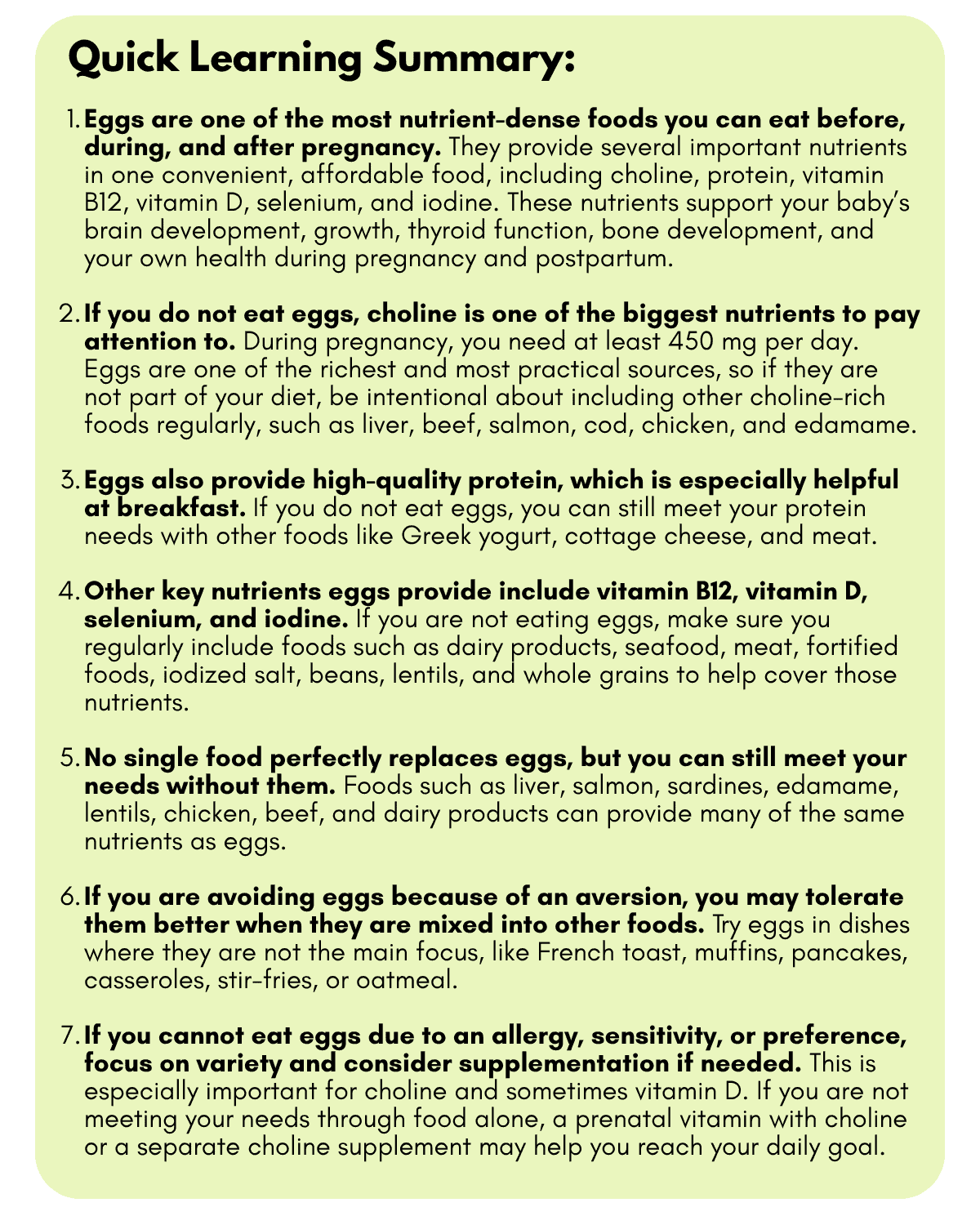
Eggs are highly recommended before, during, and after pregnancy because they provide several important nutrients in one convenient, often very affordable food.
If you cannot eat eggs due to an allergy, sensitivity, preference, or aversion, you can still meet your nutrient needs by including other foods that provide similar nutrients.
Choline
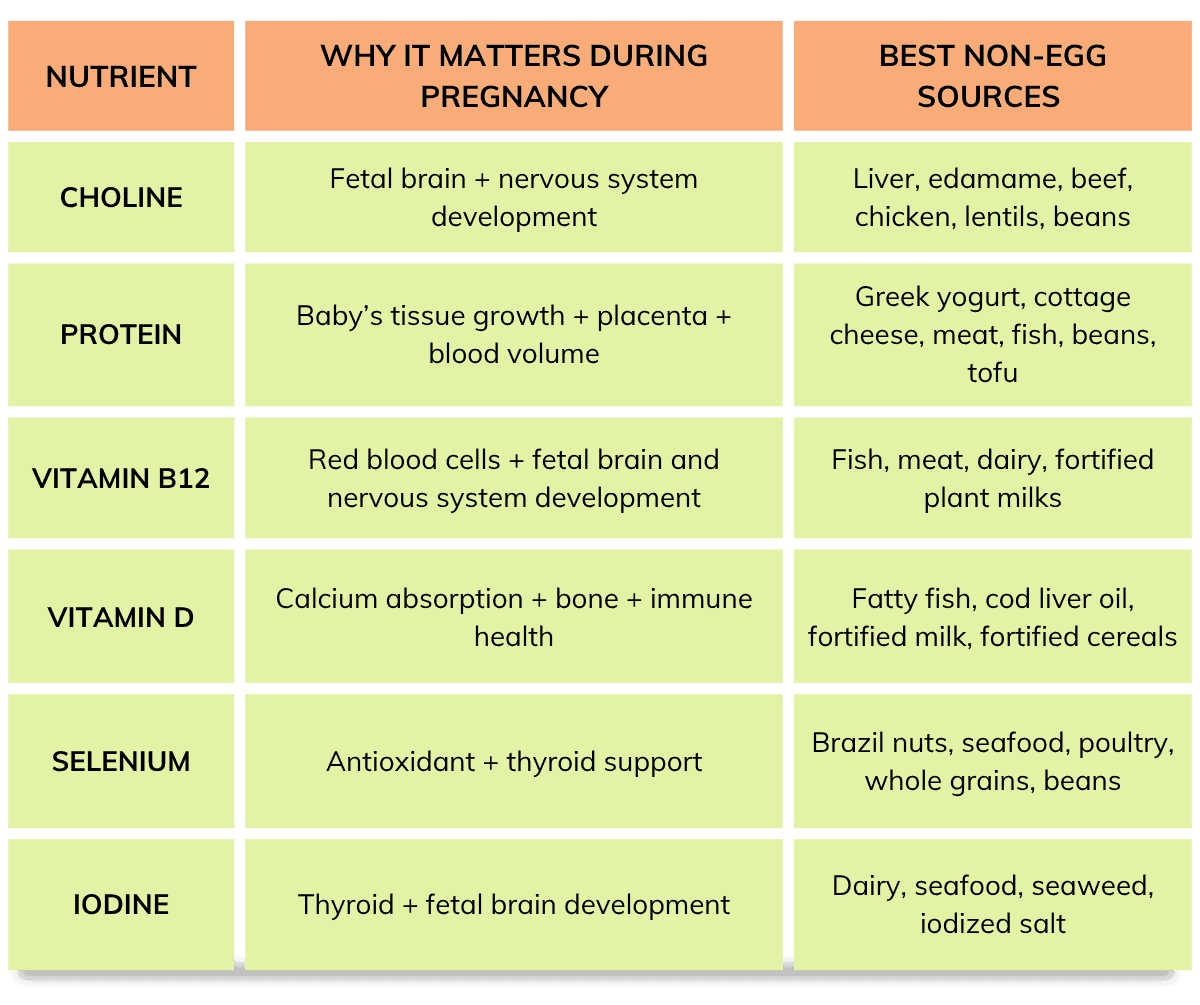
Eggs are one of the best sources of choline, a nutrient essential for fetal brain and nervous system development (1). Just like folate, choline helps prevent birth defects (2). It is also important for maternal liver and placental function during pregnancy (2).
During pregnancy, you need a minimum of 450 mg per day, which is why it is important to include choline-rich foods like eggs or other high-choline foods in your diet (3).
Foods high in choline other than eggs:
- 3 oz. of beef or chicken liver (362 mg)
- 1 cup of edamame (~ 87 mg)
- 3 oz. ground beef (73 mg)
- 3 oz. of cod (71 mg)
- 3 oz. of wild-caught salmon (56 mg)
- 3 oz. of chicken breast with skin (55 mg)
- ½ cup cooked Brussels sprouts (45 mg)
- ½ cup boiled lentils (42 mg)
- ½ cup pinto beans (30 mg)
- ½ cup cooked broccoli (30 mg)
- ½ cup plain, whole-milk yogurt (19 mg)
If you eat meat, meeting your choline needs may be easier, but it is still important to include at least one high-choline food every day.
Review the choline note for more information.

Protein
Eggs contain high-quality protein, meaning they provide all essential amino acids needed for growth and development. One large egg contains 6-7 grams of protein. So, eating 2-3 eggs in the morning provides 14-21 grams of protein!
If you do not eat eggs, you can still meet your protein needs, even at breakfast, when eggs are often a go-to protein source.
High-protein egg-free breakfast ideas:
- ¾ – 1 cup Greek yogurt with fruit and a small handful of nuts
- ½ – ¾ cup cottage cheese with 1 slice whole-grain toast
- A smoothie made with 1 cup milk, ¾ cup yogurt, or 2 tbsp nut butter
- ½ cup oats + ½ cup to make oatmeal, topped with 2 tbsp peanut or almond butter
- 1 slice whole-grain toast with ¼ avocado and 2 oz smoked salmon
- Breakfast hash made with 2-3 small sausage links, diced potato, and cut veggies
Vitamin B12
Vitamin B12 plays a key role in red blood cell formation, neurological function, and DNA synthesis (5). During pregnancy, adequate B12 intake is important for the healthy development of the fetal brain and nervous system (5).
Because vitamin B12 is primarily found in animal foods, individuals following vegetarian or vegan diets should pay extra attention to their intake.
Non-egg sources of vitamin B12 include:
- Fish (salmon, sardines, trout, and herring)
- Meat and poultry
- Dairy products such as milk, yogurt, and cheese
- Fortified foods such as some breakfast cereals and plant-based milks
Go to the vitamin B12 note
Vitamin D
Eggs contain about 40-45 IU of vitamin D per egg, mostly in the yolk, which makes them one of the few naturally occurring food sources (6). Vitamin D supports calcium absorption, immune function, and bone development for both you and your baby (7). Eggs provide a small amount of vitamin D, but they are not the only source.
Non-egg sources of vitamin D include:
- The best options are: fatty fish such as salmon, sardines, mackerel, trout, and herring
- Cod liver oil
- Fortified cow’s milk (a pretty standard practice)
- Fortified dairy yogurt (not all are fortified, so check the label)
- Fortified milks (not all plant milks are fortified, so they are not a reliable source)
- Safe sun exposure
Many individuals (especially those living in northern climates or spending most of their time indoors) may need vitamin D supplementation to meet their needs.
Learn more about vitamin D here.
Selenium
Selenium is a trace mineral that functions as an antioxidant and supports thyroid health, immune function, and fetal development during pregnancy (8).
Eggs are a moderate source of selenium, but it can also be found in a variety of other foods.
Non-egg sources of selenium include:
- Brazil nuts (one of the richest sources)
- Salmon and sardines
- Chicken and turkey
- Whole grains such as brown rice and whole-wheat bread
- Dairy products
- Beans and lentils
Iodine
Iodine is an essential mineral that supports thyroid hormone production, which plays a key role in your baby’s brain and nervous system development during pregnancy. Adequate iodine is important because thyroid hormones help regulate fetal growth, metabolism, and neurological development (9).
During pregnancy, the RDA for iodine increases to 220 mcg/day (10).
Non-egg sources of iodine (11):
- Dairy products like milk, yogurt, and cheese
- Seafood like cod, shrimp, and tuna
- Seaweed
- Iodized salt
Learn more about iodine here.
Egg White Only Allergy
Being allergic to egg whites is much more common than being allergic to egg yolks. If you are severely allergic to egg whites, we do not recommend attempting to separate the yolk from the egg white due to concerns about cross-contamination.
However, if you have more of a sensitivity (rather than a severe allergy) to egg whites, your body may tolerate eating egg yolks alone. Egg yolks contain most of the egg’s key nutrients. If tolerated, using just the yolk in foods such as oatmeal, baked goods, or sauces may be one way to still obtain its nutrients. If this is something you are considering, we recommend practicing caution and speaking with your healthcare provider/allergist first.
Egg Yolk Allergy
If you are allergic to egg yolks, we recommend simply avoiding whole eggs. You can certainly buy just egg whites to enjoy them as a protein source, but you will still want to be mindful of where you get the other essential nutrients egg yolks provide.
How to Manage Egg Aversions
Egg aversions are common during pregnancy, so you are not alone. If eggs do not sound appealing on their own, try adding them to other foods where their flavor and texture are less noticeable.
Here are a few ideas:
- Bake them into foods like muffins, pancakes, waffles, or quick breads. The egg flavor is usually not noticeable.
- Stir into oatmeal or hot cereal while it cooks to add protein and make it creamier.
- Add to casseroles or baked dishes (like breakfast bakes, quiches, or savory muffins) to blend with other ingredients.
- Mix into fried rice, pasta, or stir-fries so the egg is incorporated with other flavors and textures.
Can I eat runny eggs?
The safest recommendation during pregnancy is to cook eggs until both the yolk and white are firm. This lowers the risk of foodborne illness, including Salmonella, which can be more serious during pregnancy.
In the United States, eggs are washed and sanitized during processing, which greatly reduces bacterial contamination (12). Research even suggests you are nearly eight times more likely to get sick from lettuce than from eating an undercooked egg (13).
If you buy shell eggs, choose refrigerated, uncracked ones. Do not “re- wash” them at home, since washing can actually increase the risk of contamination by pushing bacteria through the shell.
If runny eggs are the only way eggs sound appealing right now, know that the overall risk is still relatively low, especially when eggs have been handled and stored properly.
Egg Alternatives for Cooking
If you avoid eggs due to an allergy or sensitivity, there are several ingredients that can replace eggs in cooking and baking.
- Tofu: One of the best overall substitutes because it provides high-quality protein and works well in dishes like scrambles, quiches, and casseroles.
- Chickpea flour: When mixed with water, it can mimic eggs in omelets, frittatas, and savory baking while providing protein and fiber.
- Flaxseed or chia “eggs”: Best for baking because they help bind ingredients (1 Tbsp ground flax or chia seed + 2.5 Tbsp water = 1 egg) (14)
Eggs and Cholesterol
Eggs have been unfairly blamed for raising cholesterol for years. What we know now is that for most people, eating eggs does not have a major impact on blood cholesterol levels. Rather, it has been found that eating eggs can increase your good cholesterol, HDL cholesterol, which can help your body fight off heart disease (15, 16).
There is no current “upper limit” on egg intake during pregnancy, but we recommend eating them as part of a balanced diet that includes a wide variety of other protein and fat sources. Three eggs per day get you close to the 450 mg/day choline goal during pregnancy,
Choline supplementation
Here are three individual choline supplement recommendations:
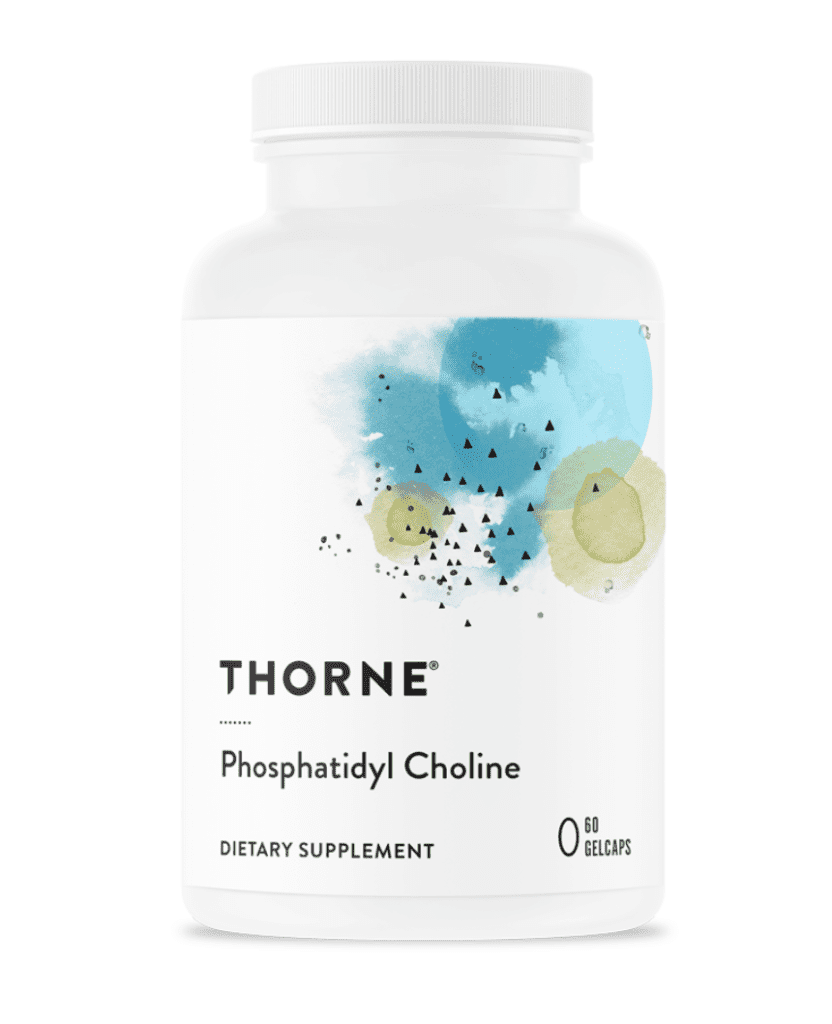
Thorne Choline contains 420 mg of choline. An okay supplement if you eat eggs occasionally and don’t eat a lot of meat and your prenatal vitamin doesn’t contain any choline or a little amount.
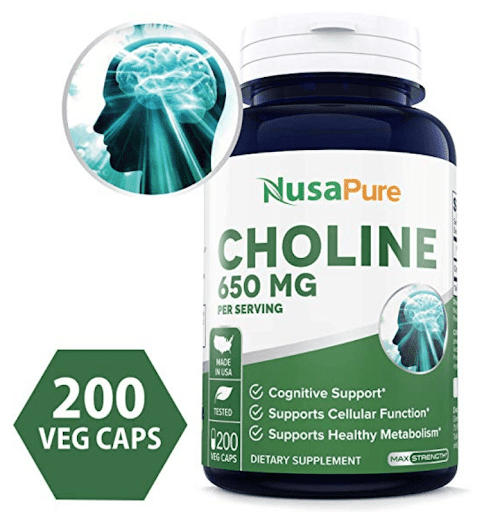
NusaPure Choline contains 650 mg in 2 pills per day. Great for those who are allergic to eggs or do not eat eggs for any other reason.
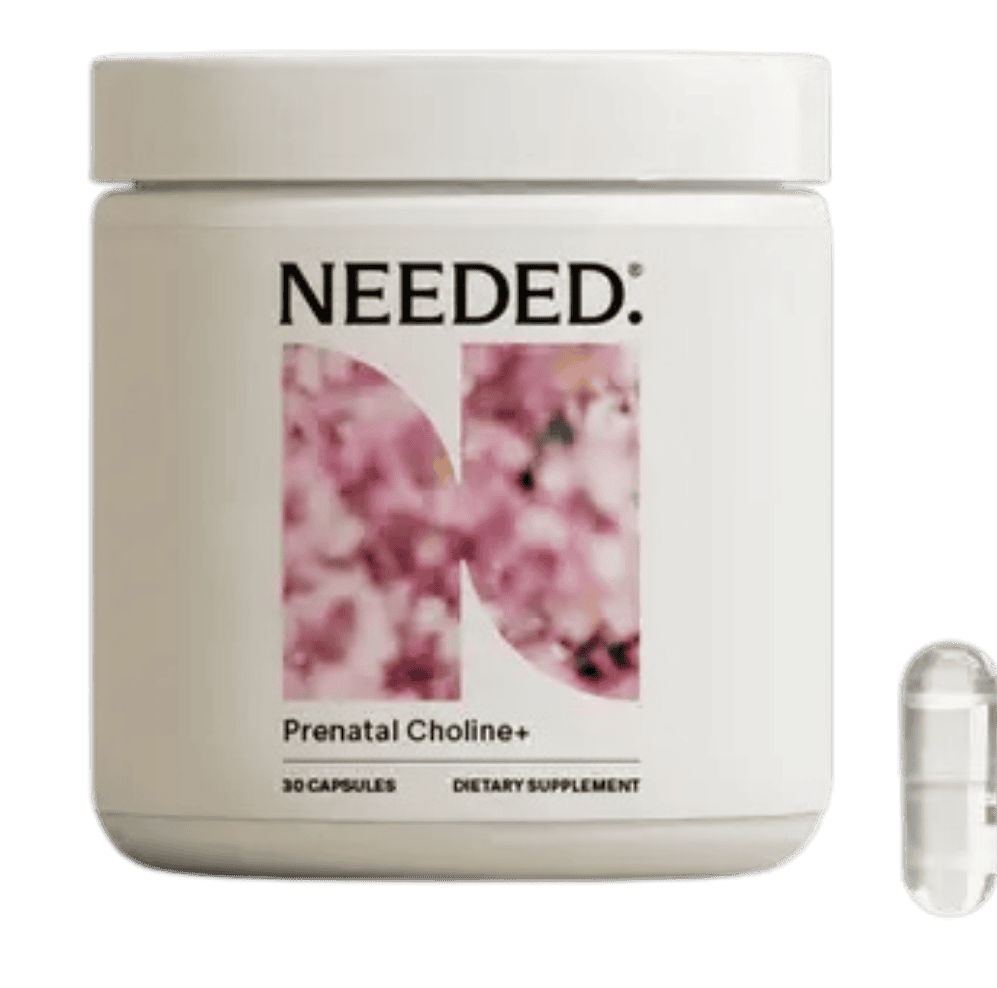
Needed choline has 500 mg of VitaCholine in 1 capsule

Written by: Ryann Kipping, MPH, RDN, LDN, and Lydia Bodi, Dietetic Intern