

If you’re allergic to shellfish (but not fin fish)
A shellfish *only* allergy does not automatically mean you need to avoid all seafood.
If you tolerate fin fish, you can still get the benefits of seafood by choosing low-mercury fish.
Low-mercury options to prioritize: salmon, sardines, anchovies, mackerel, trout, cod, haddock, tilapia, pollock, canned light tuna.
Still avoid high-mercury fish such as sharks, swordfish, king mackerel, marlin, orange roughy, and bigeye tuna.
Fish is one of the best foods you can eat during pregnancy; it is an efficient source of protein, DHA/EPA, iodine, selenium, B12, and vitamin D in a single food.
If the reverse is true, you can’t eat fin fish, but you can eat shellfish, then we recommend including shellfish regularly!
If you can’t eat any seafood at all
If you do not eat any seafood at all, the biggest nutrient concern is DHA (the main omega-3 fat important for fetal brain and eye development).
In that case, I recommend supplementing with DHA/EPA; without any seafood, you will not be able to meet your DHA needs.
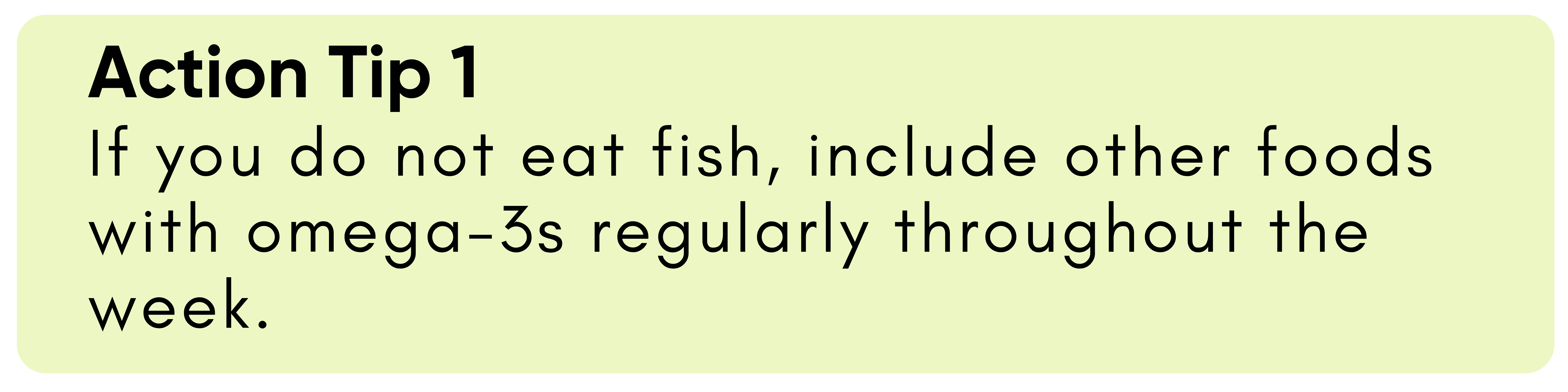
Plant omega-3s (like flax/chia/walnuts) are ALA, which converts poorly to DHA, so they’re great foods, but not a reliable source of DHA.
First-Trimester Fish Aversion
If fish sounds repulsive in the first trimester, it is okay. This is very common, and it does not mean you’re “failing” your nutrition or putting your pregnancy at risk. It just means your plan needs to shift temporarily.
Short-term strategy (what to do right now):
-
- Prioritize a DHA/EPA supplement during this phase, since fish is your most reliable food source of DHA.
- Don’t try to “force” fish if it makes you feel worse
- Revisit fish later in pregnancy when your appetite stabilizes (many people tolerate it again in the second trimester).
- DHA needs are highest in the third trimester, when fetal brain and eye development accelerate.
Other foods to include while fish feels hard:
- Pasture-raised or omega-3-enriched eggs
- Grass-fed beef and dairy (if you eat them)
- Small amounts of seaweed/algae foods (if tolerated)
Iodine note for this phase:
If fish is off your plate for weeks or months, make sure you are getting iodine from either:
- A prenatal that contains iodine (at least 150 mcg), and/or
- Regular dairy intake and/or
- Seaweed
|
Nutrient |
Why it matters in pregnancy |
Best non-fish sources |
|
DHA/EPA |
Fetal brain + eye development |
Algae supplement, pasture-raised/omega-3 eggs, grass-fed beef & dairy, seaweed |
|
Iodine |
Thyroid + brain development |
Iodized salt, dairy, eggs, seaweed (in moderation), find a prenatal with a sufficient amount |
|
Vitamin D |
Bone health, immunity, and pregnancy outcomes |
Sun exposure, fortified dairy/plant milks, eggs, mushrooms, supplement |
|
Selenium |
Thyroid + antioxidant support |
Brazil nuts, eggs, dairy, poultry |
|
Vitamin A (retinol) |
Vision, immunity, fetal development |
Eggs, dairy, liver (in small amounts) |
|
Vitamin E |
Antioxidant protection |
Nuts, seeds, avocado, olive oil |
|
Calcium |
Bones + fetal skeleton |
Dairy, fortified milks, tofu, sardines (if you eat them), leafy greens |
|
Phosphorus |
Bone + cellular function |
Dairy, beans, whole grains, nuts |
|
Vitamin B12 |
Nervous system + red blood cells |
Eggs, dairy, meat — supplement if vegetarian |
Vitamin D Note
Whether you eat fish or not, most people need to supplement vitamin D in pregnancy.
But this is especially important if you avoid seafood, since fatty fish is one of the only reliable food sources of vitamin D.
Have your level checked, if possible, and plan to supplement. Learn more about vitamin D here.
Iodine Note
Iodine is required for the synthesis of thyroid hormones, which support fetal brain and nervous system development. Needs increase in pregnancy, and seafood is one of the more reliable dietary sources, so iodine is a nutrient to pay closer attention to if you avoid seafood.
How to cover iodine if you don’t eat seafood:
- Use a prenatal that includes iodine; not all do—check the label and see our recommendations here.
- Use a combination of iodized salt and sea salt in the kitchen.
- Include dairy and/or eggs if tolerated, as they can contribute iodine.
Seaweed contains iodine, but the amount can vary widely and may be excessive depending on the type and serving size. For this reason, seaweed is not the most consistent source of iodine during pregnancy.
Learn more about iodine here.
If you are a vegetarian or a vegan
See the vegetarian note for full recommendations on protein, iron, B12, iodine, and omega-3 sources.
Other Food Source of direct DHA
These are helpful add-ons, but not enough alone without a supplement:
- Pasture-raised or omega-3-enriched eggs
- Omega-3-enriched milk
- Algae/seaweed (food or supplement)
- Grass-fed beef
- Grass-fed dairy
These are good foods to prioritize weekly, but they should still be paired with an algae- or fish-based DHA.
What Supplement Should You Use?
Look for a product that:
- Contains DHA + EPA, at least 300 mg of DHA
- Comes from small fish or algae (not flaxseed or flax oil)
- Is third-party tested for purity (mercury, heavy metals, etc.)
Supplement Examples

Nordic Naturals Arctic Cod Liver Oil contains no Vitamin D but does contain some Vitamin A along with DHA & EPA.

Nordic Naturals Algae Omega – no Vitamin D

Nordic Naturals Prenatal DHA also contains 400 IUs Vitamin D so make sure to take that into account.
The Bottom Line
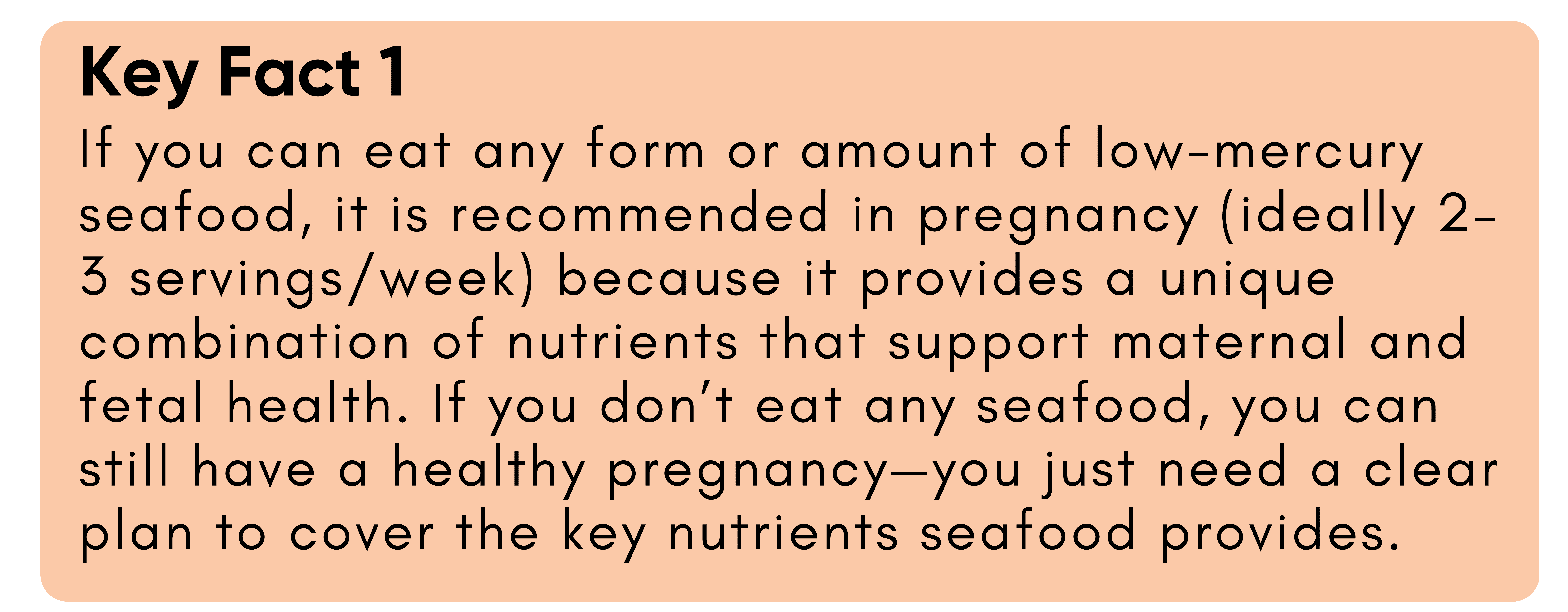
- If you can eat any type of low-mercury seafood, it is recommended in pregnancy, ideally two to three servings per week.
- If you cannot eat fish or any seafood, DHA is the main gap, and you should plan to supplement with DHA/EPA.
- Plant-based omega-3 foods, such as flax and chia, are valuable, but they do not reliably meet pregnancy DHA needs on their own.
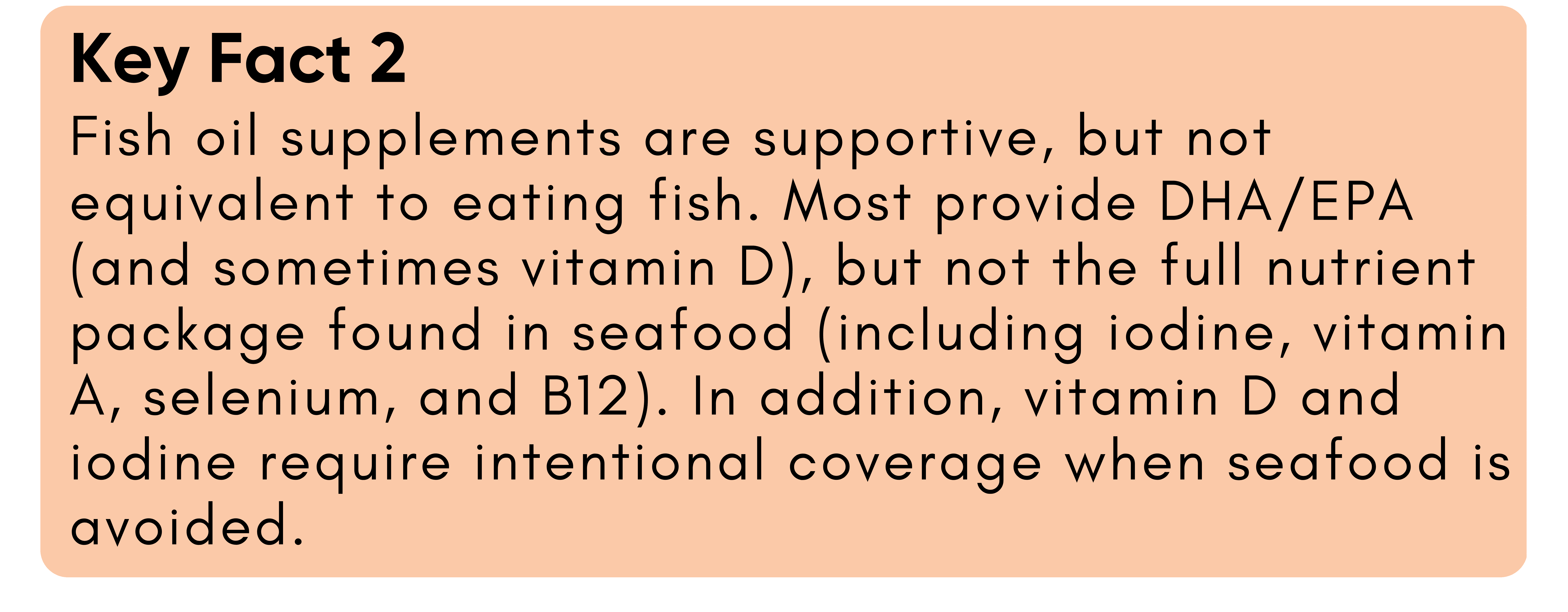
- Fish oil supplements are beneficial but not nutritionally equivalent to eating fish, as they typically provide only DHA/EPA and, in some cases, vitamin D, rather than the full nutrient profile found in seafood.
- If seafood is off the table, have a clear plan for foods you will include to obtain vitamin D and iodine, as well as a prenatal vitamin that provides these nutrients.