

What are Goji Berries?
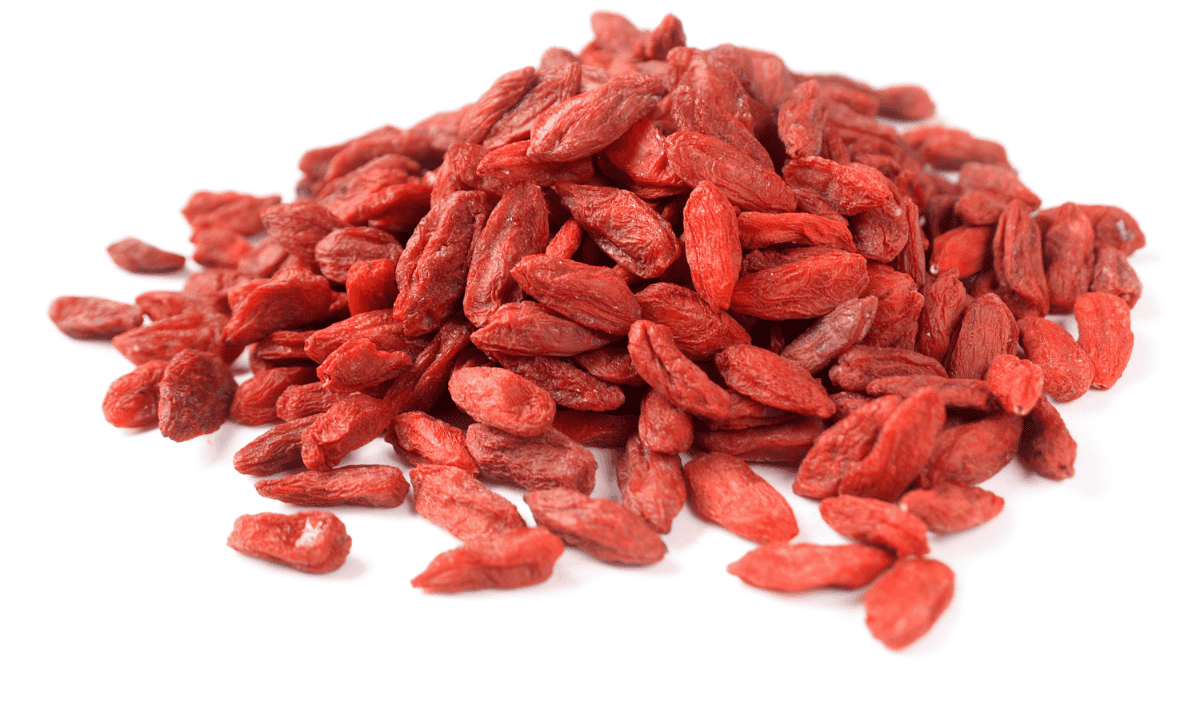
- Goji berries are tiny red fruits similar to raisins when dried
- People eat them as a snack, in teas, smoothies, cereal, or supplements
- They are popular because they contain vitamins, minerals, fiber, and antioxidants, which are substances that help protect your cells from damage (1, 1.1)
Goji berries are usually found in Asia, particularly in the northwest regions of China (2). For thousands of years, they have been traditionally used in Chinese medicine, but are gaining in popularity in the U.S. due to claims of high antioxidant content and potential health benefits.
Are Goji Berries Safe For Pregnancy?
There are very few clinical studies specifically evaluating goji berry intake during pregnancy, so no definitive conclusions can be drawn about its effects.
Animal and laboratory studies (3) suggest potential effects, including:
- Protection against oxidative stress
- Immune modulation
- Increased insulin sensitivity
- Antioxidant activity
However, these findings cannot be directly applied to human pregnancy safety due to the lack of research.
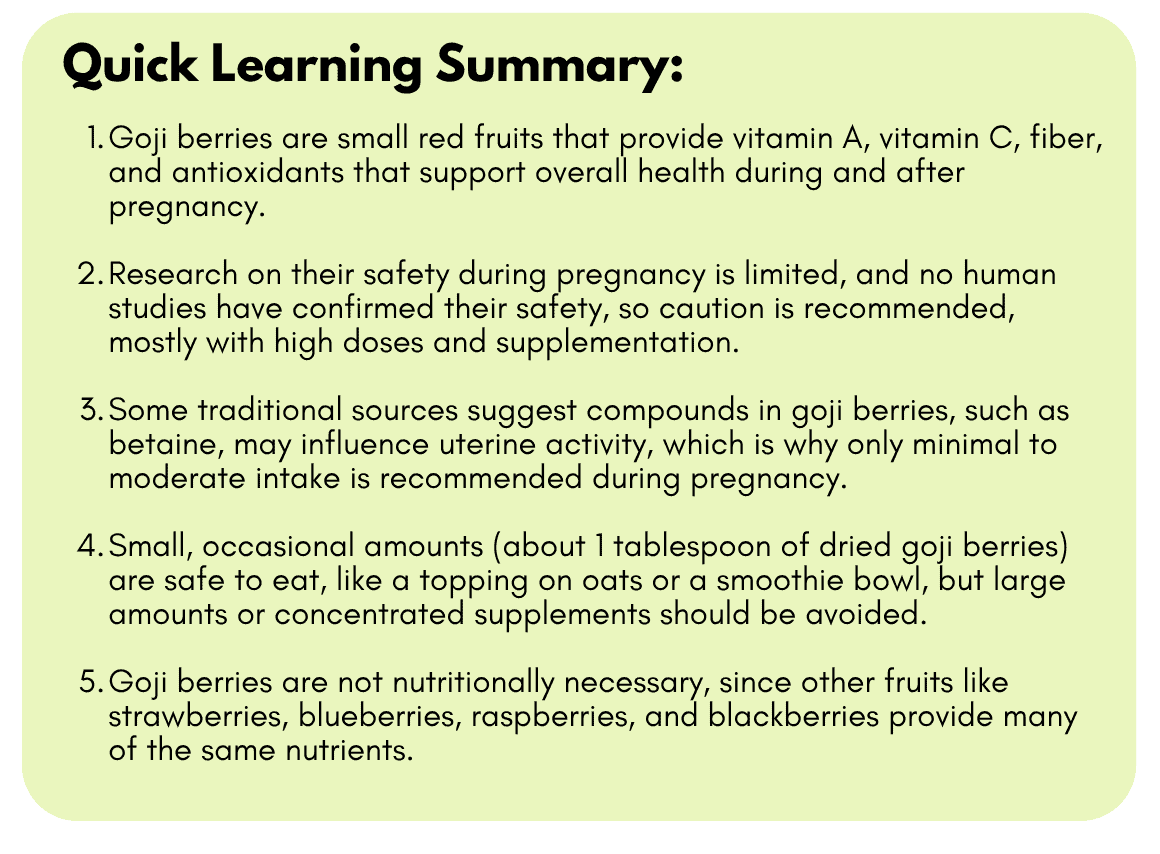
That said, one practical upper limit is about 1 tablespoon (15 grams) per day, not as a long-term “staple.”
Why Caution Is Often Recommended
Goji berries naturally contain betaine, a plant compound that supports liver function, cellular hydration, and methylation processes in the body (4).
Betaine itself is not inherently harmful. In many contexts, it may even provide benefits such as supporting metabolic health and reducing oxidative stress.
However, caution is recommended during pregnancy because some traditional Chinese herbal medicine sources (5) suggest that certain compounds in goji berries, including betaine, are associated with induced menstrual flow and vaginal contractions.
Although there are no current human studies suggesting this correlation, we want to exercise caution and limit our goji berry consumption during pregnancy – just in case. Eating small amounts of dried goji berries occasionally (for example, as a topping on a smoothie bowl, yogurt, or oatmeal) is safe, but regularly consuming large amounts or concentrated supplements is not advisable until more research is available.
Potential Risks and Drug Interactions to Consider
Goji berries may interact with certain medications, such as anticoagulants, like Warfarin (6). If you are currently on Warfarin or taking any other anticoagulant medication, we recommend erring on the side of caution by abstaining from goji berries.

Can I eat them while trying to conceive or postpartum?
Yes, there are no contraindications to consuming goji berries before or after pregnancy.
Nutrient Profile of Goji Berries (1 tbsp) (7)
- Calories: 19.6 kcal
- Carbs: 4.32 g
- Fiber: 0.72 g
- Protein: 0.8 g
- Calcium: 10.64 mg
- Iron: 0.4 mg
- Potassium
- Vitamin A: 450 mcg (50% of the DV)
- Vitamin C: 2.72 mg
What are the Benefits of Eating Goji Berries?
High in vitamin A (beta-carotene)
Goji berries are rich in beta-carotene, a precursor to vitamin A that supports your baby’s development, including the eyes, limbs, heart, and immune system, while also helping maintain your own vision, tissues, and immune health during pregnancy (9). Unlike retinol, beta-carotene is not the preformed vitamin A that can be problematic in pregnancy.
Good source of vitamin C
Goji berries have vitamin C, which is essential during pregnancy. It supports immune function, boosts iron absorption, protects our cells from damage, and is linked to healthier birth outcomes (11).
Fiber-rich
Goji berries, like many other fruits, contain fiber. Fiber can promote regular bowel movements, helping prevent constipation and preeclampsia (12). Fiber also helps keep us fuller for longer, regulates blood sugar, and supports healthy gut bacteria (13).
High in antioxidants
Goji berries contain several types of antioxidants that work together to protect our cells from harmful damage, fight inflammation, and support and strengthen our immune systems during and after pregnancy (14).
Goji Berries vs. Other Berries
Goji berries are often called a “superfood,” but how do they actually compare to other common berries like blueberries, strawberries, and raspberries?
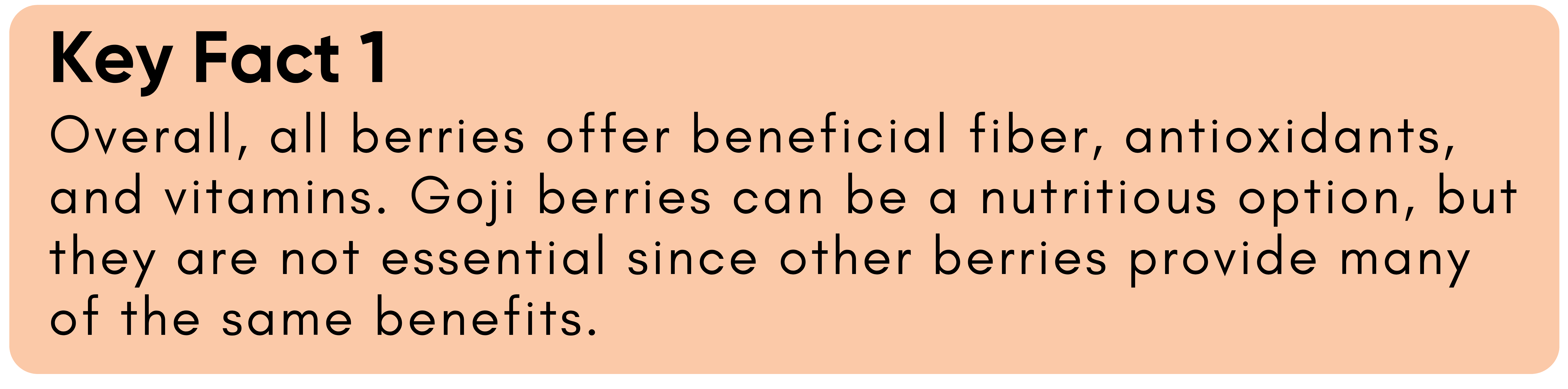
Compared with blueberries, strawberries, and raspberries, their main standout is vitamin A. Most other types of berries provide minimal vitamin A, so that is what makes goji berries unique.
Other berries shine in different ways. Strawberries and blueberries tend to provide more vitamin C, which supports immunity and iron absorption, while raspberries and blackberries are especially rich in fiber to support digestion and help with constipation (13).

Ways to Include Goji Berries in Your Diet
If you really love goji berries, or they are popularly grown/available where you live, they are very easy to add to your diet, and can be used like other berries!
- Blend into smoothies
- Add to oatmeal or yogurt for a slightly sweet, chewy topping
- Mix into a trail mix with nuts, seeds, and dark chocolate
- Sprinkle on salads for a pop of color and natural sweetness
- Stir into baked goods like muffins, granola bars, or energy bites
- Steep in hot water or tea to soften them and create a mild goji berry tea
Written by: Lydia Bodi, Dietetic Intern, and Ryann Kipping, MPH, RDN, LDN