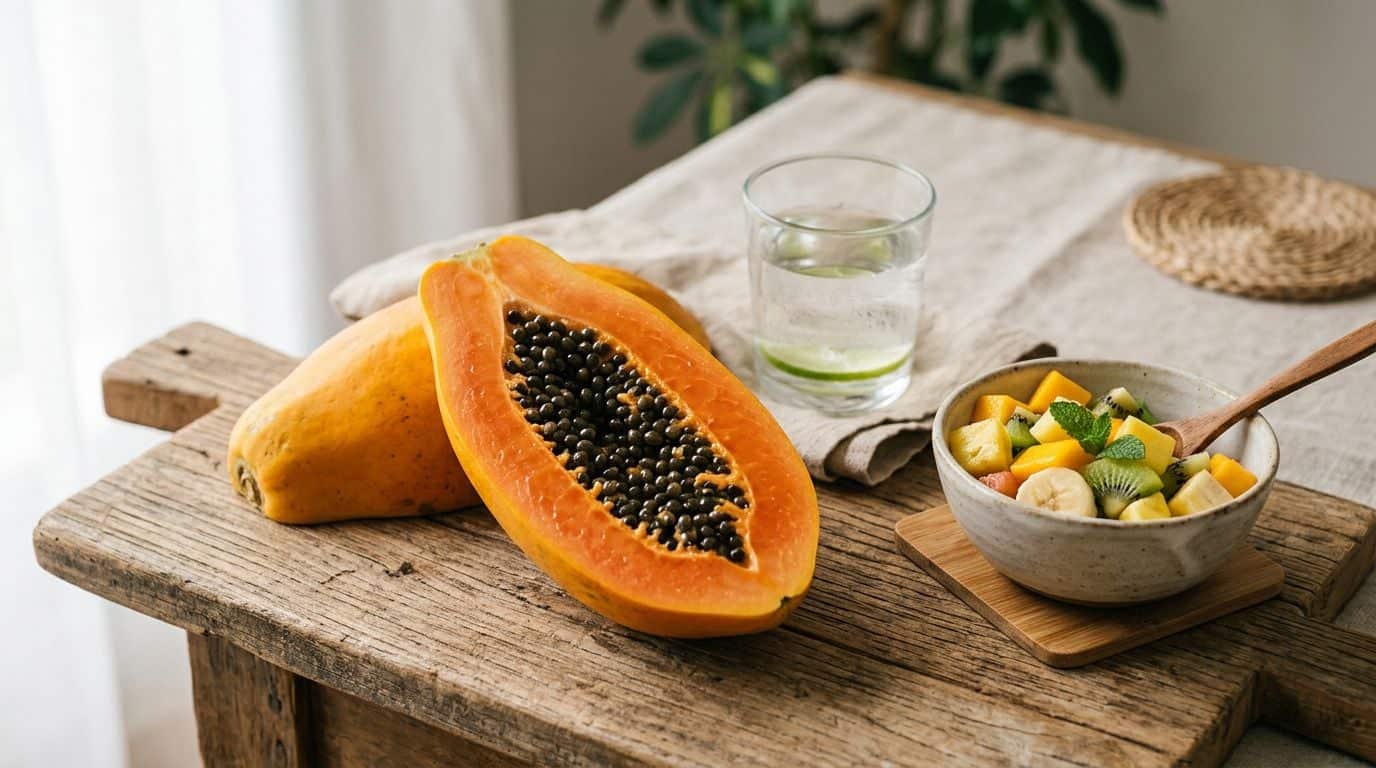

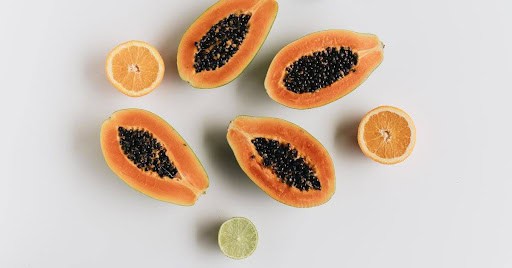
Papaya contains protein-digesting enzymes, most notably papain. Papain is found in the highest concentrations in the latex of unripe or green papaya and is sometimes included in digestive supplements.
Pregnancy can slow digestion and contribute to bloating, constipation, indigestion, and reflux. Although digestive enzymes may sound like a simple solution, ripe papaya, unripe papaya, and concentrated papain supplements do not carry the same level of concern.
What Are Papaya Enzymes?
Papain is a proteolytic enzyme, meaning it helps break proteins into smaller peptides and amino acids. It has traditionally been used as a meat tenderizer and is also included in some digestive enzyme products.
Your body naturally produces several types of digestive enzymes, including:
- Proteases, such as pepsin and trypsin, to digest protein
- Amylases to digest carbohydrates
- Lipases to digest fat
Papain acts like the body’s proteases but is derived from papaya.
Ripe papaya contains significantly less papaya latex than unripe or semi-ripe fruit. It also provides fiber, vitamin C, folate, potassium, and carotenoid antioxidants.
Papain supplements are more concentrated than ripe papaya and may produce stronger biological effects than eating the fruit as part of a meal.
Potential Digestive Benefits
Papaya enzymes are commonly marketed for indigestion, bloating, and a sensation of food sitting heavily in the stomach. Theoretically, their protein-digesting activity may help break down protein-rich meals.
However, evidence supporting papain supplements for pregnancy-related digestive symptoms is not available. Most available research on supplemental digestive enzymes comes from nonpregnant populations or involves people with diagnosed digestive conditions.
Ripe papaya may support digestion for another reason: its fiber and water content can promote bowel regularity. Eating ripe papaya is not equivalent to taking a concentrated papain supplement.
Ripe Papaya Versus Unripe Papaya
The form of papaya matters.
Ripe papaya
Ripe papaya is typically orange, soft, and sweet. It contains substantially less papaya latex than unripe or semi-ripe papaya.
In one rat study, consuming a ripe papaya blend was not associated with differences in implantation sites, viable fetuses, or signs of fetal or maternal toxicity compared with the control group. Ripe papaya juice also did not produce significant contractions in uterine tissue isolated from pregnant or nonpregnant rats. However, this was an animal study and does not provide definitive evidence of safety in human pregnancy (1).
When eaten in typical food portions, fully ripe papaya is considered substantially lower concern than unripe papaya, papaya latex, or concentrated papain supplements.
Ripe papaya also provides:
- Fiber
- Vitamin C
- Folate
- Potassium
- Carotenoid antioxidants
Unripe papaya
Unripe or green papaya contains considerably more latex and papain. It may be used in savory dishes, traditional remedies, meat tenderizers, and concentrated enzyme products.
In laboratory studies using rat uterine tissue, crude papaya latex produced sustained uterine contractions. The contractions observed in late-pregnancy rat uterine tissue were described as spasmodic or tetanic and were comparable with responses produced by oxytocin and prostaglandin F2 alpha (1, 2).
Additional laboratory research has examined how papaya proteinases may stimulate rat uterine tissue, although these findings cannot be assumed to occur in the same way in humans after consuming papaya or a papain supplement (3).
These studies do not prove that eating green papaya will cause contractions, miscarriage, or preterm labor in humans. They do, however, provide a biologically plausible reason for caution, especially since adequate human pregnancy studies are unavailable.
Papain supplements
Papain supplements may be made from papaya latex or unripe papaya. These products provide a more concentrated exposure than a serving of ripe fruit.
Ingredients that warrant additional caution during pregnancy include:
- Papain
- Papaya latex
- Green papaya extract
- Unripe papaya
- Meat tenderizer containing papain
- High-dose protease blends that do not clearly identify their sources
Supplement potency, purity, and ingredient sourcing can vary. Third-party testing may provide some reassurance about product quality and label accuracy, but it does not establish that a product is safe during pregnancy.
Potential Risks and Side Effects
The primary concern surrounding papaya enzymes during pregnancy is the theoretical risk of uterine stimulation from unripe papaya latex or concentrated papain extracts.
Uterine activity
Crude papaya latex has stimulated uterine contractions in isolated rat uterine tissue, including tissue taken from pregnant rats. Adequate human studies have not determined whether eating unripe papaya or taking papain supplements produces the same effect during human pregnancy (1, 2).
Allergic reactions
Papain can cause IgE-mediated allergic reactions in susceptible individuals. Reported reactions have included itching, eye and nasal symptoms, abdominal cramping, diarrhea, asthma, angioedema, and, in rare cases, systemic reactions or anaphylaxis (4, 5).
Cross-reactivity has also been documented between papain and certain plant-derived allergens. Anyone with known papaya, protease, fruit, pollen, or latex-related allergies should be particularly cautious with concentrated papain products (6, 7).
Digestive upset
Concentrated digestive enzymes may cause nausea, abdominal cramping, gas, or diarrhea, especially when taken in excessive amounts or without a clear medical need.
Medication interactions
Digestive enzyme products may contain multiple ingredients and could interact with medications, particularly anticoagulants or blood sugar-lowering medications. The relevance of an interaction depends on the specific ingredients and their doses.
Uncertain dosing and formulations
Multi-enzyme products may contain herbs, acids, bile salts, fruit extracts, or other active ingredients with little or no pregnancy-specific safety information.
There are no adequate human pregnancy trials establishing that papain supplements are safe or showing that they improve routine pregnancy-related indigestion.
Because the potential benefit is uncertain and animal research raises a plausible concern, avoiding concentrated papain products during pregnancy is the more cautious approach.
Alternatives for Pregnancy Digestive Symptoms
The best alternative depends on whether the primary concern is reflux, constipation, bloating, or difficulty digesting particular foods.
For reflux and heartburn
- Eat smaller meals more frequently.
- Avoid lying down immediately after eating.
- Allow several hours between dinner and bedtime when possible.
- Identify personal trigger foods rather than unnecessarily restricting broad food groups.
- Limit very large or high-fat meals if they worsen symptoms.
- Elevate the head of the bed if nighttime reflux is a concern.
- Be cautious with peppermint because it may relax the lower esophageal sphincter and worsen reflux in some people.
Antacids, H2-receptor blockers, and proton pump inhibitors may sometimes be appropriate during pregnancy. Medication selection and dosing should be discussed with a prenatal healthcare provider.
Stomach acid plays an essential role in digestion. It helps prepare food for digestion in the intestine and creates the acidic environment needed to convert pepsinogen into pepsin, the primary enzyme responsible for beginning protein digestion in the stomach (8, 9).
Gastric acid also helps release vitamin B12 from food proteins and facilitates the digestion or absorption of nutrients including iron, calcium, and vitamin B12 (10, 11). The stomach’s acidic environment also serves as an important defense against microorganisms entering through food and beverages (12, 13).
This does not mean acid-suppressing medications should never be used. They can be medically appropriate when their benefits outweigh their risks, particularly when symptoms are persistent, severe, or affecting someone’s ability to eat and sleep.
Go to the heartburn relief guide.
For constipation
- Increase fiber gradually.
- Drink enough fluids throughout the day.
- Include foods such as prunes, pears, kiwi, berries, beans, lentils, chia seeds, vegetables, and whole grains.
- Include potassium- and magnesium-rich foods such as potatoes, bananas, dairy products, beans, leafy greens, nuts, seeds, and coconut water.
- Stay active
Increasing fiber without increasing fluid intake may worsen constipation, so the two should generally be addressed together.
Go to the constipation relief guide.
For bloating or a heavy feeling after meals
- Try smaller portions.
- Slow down while eating and chew food thoroughly.
- Avoid becoming overly hungry before meals.
- Notice whether symptoms are connected to very fatty meals, large quantities of fiber at once, carbonated drinks, or specific fermentable carbohydrates.
- Ginger or fennel tea may be soothing for some people when consumed in moderate amounts.
Persistent bloating, significant abdominal pain, vomiting, diarrhea, unintentional weight loss, blood in the stool, or difficulty tolerating food deserves medical evaluation rather than continued experimentation with digestive supplements.
Go to the bloating relief guide.
Other Digestive Enzymes
Digestive enzyme products are available without papain or bromelain. They may contain enzymes similar to those naturally produced by the body, including:
- Lipase for fats
- Amylase for carbohydrates
- Proteases for proteins
- Lactase for lactose
- Alpha-galactosidase for certain fermentable carbohydrates
These products are not automatically proven safe simply because they do not contain papain. Many broad over-the-counter digestive enzyme blends have not been specifically studied during pregnancy either.
Before using a digestive enzyme, consider the following factors.
The complete ingredient list
Review all active and inactive ingredients, not only the enzyme listed on the front of the package. Multi-enzyme blends may also include herbs, acids, bile salts, probiotics, or plant extracts.
The enzyme source
Enzymes may be derived from microbial, fungal, animal, or plant sources. The source may matter for allergies, dietary preferences, sensitivities, and pregnancy safety.
The specific digestive problem
A broad digestive enzyme blend may not help if symptoms are primarily caused by reflux, constipation, gallbladder disease, food intolerance, celiac disease, inflammatory bowel disease, small intestinal bacterial overgrowth, or another gastrointestinal condition.
For example, lactase may be helpful for lactose intolerance because it addresses a specific missing enzyme. A broad enzyme blend is less likely to be useful when no problem with enzyme production has been identified.
Medical conditions and medications
Extra caution is appropriate for anyone using anticoagulants or blood-sugar-lowering medications or managing conditions such as pancreatitis, inflammatory bowel disease, small intestinal bacterial overgrowth, or exocrine pancreatic insufficiency.
Prescription pancreatic enzymes are the standard treatment when exocrine pancreatic insufficiency has been medically diagnosed. Over-the-counter blends should not be used as a substitute for appropriate evaluation or prescription treatment.
Dose and timing
Most digestive enzymes are taken immediately before or with the first bites of a meal. Follow the product directions and avoid exceeding the recommended amount.
Taking more enzymes does not necessarily improve digestion and may increase the risk of gastrointestinal side effects.
Our Recommendation
For most pregnant people experiencing routine constipation, bloating, indigestion, or reflux, symptom-specific food and lifestyle strategies should be the first step.
Fully ripe papaya is different than green papaya, and concentrated papain supplements can be treated differently as well. In a rat model, ripe papaya did not produce the same uterine effects seen with crude papaya latex. However, human pregnancy studies are still needed before definitive safety conclusions can be made (1).
Green or semi-ripe papaya, papaya latex, and concentrated papain products warrant greater caution due to their higher latex content, the uterine contractions observed in animal studies, and the lack of adequate human pregnancy safety studies.
See the digestive enzymes guide for our pregnancy-safe recommendations.
Bottom Line
- Papaya enzymes primarily come from papain, a protein-digesting enzyme found in papaya latex, especially in unripe or green papaya.
- Fully ripe papaya differs from unripe papaya and from concentrated papain supplements. It contains much less latex and also provides fiber, vitamin C, folate, potassium, and antioxidants.
- Unripe papaya and papaya latex deserve more caution during pregnancy. Animal studies found that crude papaya latex stimulated uterine contractions, while ripe papaya juice did not have the same effect. Human pregnancy studies are still lacking.
- Concentrated papain supplements are best avoided during pregnancy unless specifically recommended by a healthcare provider. Their benefits for common digestive symptoms are unproven, and reassuring data on pregnancy safety are not available.
- For reflux, constipation, bloating, or indigestion, start with strategies targeted to the specific symptom. Food choices, hydration, meal timing, movement, and then digestive enzymes without papain or bromelain.