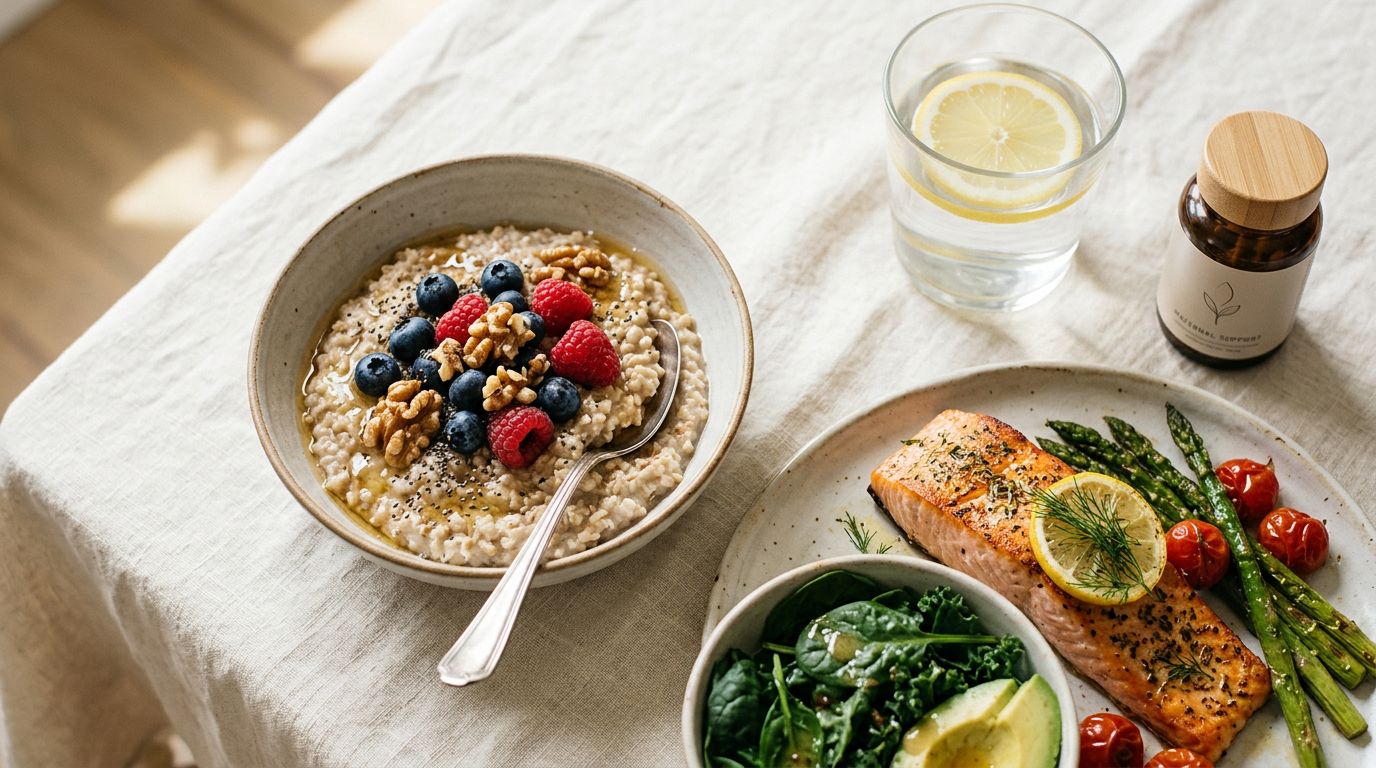

Nourishing your body while nourishing your baby
Breastfeeding is a powerful way to support your baby’s growth and development, and it places nutritional demands on your body. Your body is continuing to recover from pregnancy and birth, while also producing nutrient-rich milk that requires extra energy, fluids, and key nutrients to nourish both you and your baby.
The goal right now is to:
- Support milk production
- Support healing and recovery
- Eat nutrient-dense foods daily
How much to eat while lactating
Breastfeeding increases your energy needs, but that doesn’t mean you need to count calories to hit a specific goal. Most people need an additional ~300–500 calories per day, depending on how often they breastfeed, their activity level, and their body size.
Instead, focus on:
- Eating regular meals and snacks every 3-4 hours
- Responding to hunger cues when they come, i.e., if you feel hungry, eat something!
- Building nutrient-dense meals/snacks (Protein + Carb + Fat)
For a complete guide to Nutrition for Breastfeeding, click here.
Does what I eat go directly to my baby?
Not in a “you ate this, so baby immediately gets this” kind of way. Your body makes breast milk from nutrients in your bloodstream, and it works hard to keep your milk nourishing for your baby.
If you are not getting enough key nutrients, your body may draw on your own stores to help produce milk. That means lactation nutrition is not just about your baby. It is also about you.
Eating enough and getting key nutrients in can help support your energy, recovery, milk production, and nutrient stores while your body is doing the very real work of feeding a baby.
You do not need to eat perfectly while breastfeeding. You just need simple, consistent support.
Allergies and intolerances with baby
Could my diet cause my baby to become more fussy or have a reaction?
Check out the breastfeeding troubleshooting guide HERE
The 3 Foundations that Matter Most
These are the three things that we want you to focus on during lactation
1. Eating Enough
Why it matters: Your body needs consistent and enough fuel to produce milk each day. Undereating can decrease milk quality and supply.
Start here:
- Aim for 3 meals plus 2-3 snacks per day
- Build simple meals with protein, carbs, fat, and color
- Nutrient-dense foods
Simple meal structure
Fiber/color: fruits, veggies, beans, lentils
Protein: meat, eggs, seafood, dairy
Fat: olive oil, nuts, butter, avocados, seeds
Flavor: herbs and spices
Explore more:
2. Hydration
Why it matters: Fluid loss occurs during breastfeeding, and the need to replenish fluids and key minerals such as sodium, potassium, and magnesium increases.
Start here:
- Always carry a water bottle
- Have a glass of water before or after you feed your baby
- Add flavoring to water if drinking plain water is difficult
- Get water from foods (melons, cucumbers, celery, tomatoes)
- Incorporate a daily mineral mocktail
- Check urine color; if it’s getting darker, that’s your sign to go drink some water and replenish!
Explore more:
3. Protein, Vitamin D, and Choline
Why it matters: Protein supports tissue repair, healing, hormone function, milk production, blood sugar balance, and postpartum recovery. Vitamin D supports immune health, mood, bone health, and the baby’s vitamin D status. Choline supports brain health, nervous system function, and the baby’s ongoing development.
Start here:
- Include a protein source with each meal and snack (aim for ~30g protein at meals)
- Include choline-rich foods regularly, especially eggs
- Ask your provider about vitamin D testing and supplementation – you or baby needs to take a vitamin supplement
Top sources:
- Protein: eggs, meat, poultry, fish, Greek yogurt, cottage cheese, beans, lentils
- Vitamin D: salmon, sardines, eggs, fortified milk, fortified yogurt, sunlight, supplementation if needed
- Choline: eggs, beef, chicken, fish, dairy, soybeans, beans, Brussels sprouts
Some tips:
- Protein powder or collagen, if necessary, to help with intake
- Add eggs when you can: breakfast bowls, toast, salads, fried rice, or snacks
- Have ready-to-eat protein easily accessible (eggs, yogurt, cottage cheese, nuts)
- Keep easy fish options on hand, like tuna packets, salmon pouches, sardines, or frozen salmon, so you can add them to quick meals without extra prep.
Explore more:
Common Symptoms while Breastfeeding
It’s normal to experience some physical changes while breastfeeding, including:
Increased hunger and thirst
- Eat every 3-4 hours
- Keep a water bottle with you at all times
- Add minerals to your water at least once per day
- Extra snacks with you
Fatigue (especially early postpartum)
- Eat enough daily (especially protein and iron-rich foods)
- Prioritize sleep
- Stay hydrated (try a mineral mocktail)
- Consider checking labs (iron and thyroid)
Clogged ducts or mastitis
- Anti-inflammatory foods (colorful produce and omega-3s)
- Balanced meals with all food groups (fiber, fat, protein, color)
Learn more in our Breastfeeding Troubleshooting guide.
Occasional mood fluctuations
- Prioritize regular, simple meals
- Include omega-3s, magnesium, and B vitamins
- Seek support; nutrition is supportive but not a replacement for mental health care
Are there any foods I should avoid?
You don’t need to avoid specific foods entirely while breastfeeding, but be mindful of things like caffeine, alcohol, and mercury, which may cause a decrease in nutrients in your milk.
Alcohol
- There are no health or lactation benefits to consuming alcohol; however, it does not need to be avoided completely, but consumed responsibly.
- Traditional recommendations about “pumping and dumping” after consuming alcohol are not actually evidence-based. Alcohol does pass into breast milk, but it does not stay in it until it’s pumped out of the breasts. Actually, pumping does not decrease the alcohol concentration of your milk. Your BAC (blood alcohol concentration) is what correlates to how much alcohol is in your breast milk.
- BAC peaks around 30-60 minutes after a standard drink and takes about 2 hours to clear from blood and milk. However, the exact time depends on factors like food eaten, number of drinks, weight, and metabolism.
Explore more:
Caffeine
- Caffeine passes into breast milk; it is recommended to consume caffeine in moderation.
- 1-2 cups of coffee daily, or 150- 300 mg, is considered safe for mom and baby
Explore more:
Mercury
- Avoid high mercury fish because mercury can pass through breast milk.
- King Mackerel, shark, swordfish, marlin, orange roughy, and tilefish are higher mercury foods.
- There are plenty of low-mercury seafood options! They provide many essential nutrients, including protein, micronutrients, and omega-3s, which are important for lactation.
Explore more:
Is there anything I can eat to increase my milk supply?
Consuming an adequate amount of calories and fluids supports overall milk supply. The main thing that is needed to maintain an ample milk supply is frequent and effective milk removal, so either breastfeeding or pumping consistently!
Galactagogues
Galactagogues are herbs, foods, or drinks thought to increase milk supply.
- Mixed research in this area; some have research, and some don’t
- Common examples include lactation cookies, brownies, oatmeal, flaxseeds, ginger, papaya, nuts and seeds, chickpeas, and spices like fennel and fenugreek.
- No strong clinical evidence that supports the amount of these foods increasing milk supply. However, these foods are generally safe to include, and anyone who wants to try can.
- It’s not to say they can’t increase milk supply; it’s mainly anecdotal claims rather than clinical data.
- These items have calories and may boost overall intake, helping meet increased energy needs and possibly explaining why women see increased milk supply.
Any foods that decrease milk supply?
Dips in milk supply are often caused by:
- Infrequent milk removal
- Poor latch or ineffective milk removal
- Certain medications
- Menstrual cycle
- Dehydration
- Insufficient calorie intake
- Illness
Less commonly, low milk supply may be due to a medical condition, complications, or anatomical issues. If you believe you have a low milk supply and haven’t already, the priority should be to work with a certified lactation consultant. The addition of galactagogues may help, but emphasis should be on effective milk removal, adequate nutrition, hydration, and individualized lactation support when needed.
Supplements while Breastfeeding
Everyone: Continue a prenatal vitamin!
Consider these (based on labs, diet, or symptoms):
- Omega-3s: If you do not eat fish
- Vitamin D: if you’ve tested and levels are low
- Probiotics: if you do not eat fermented foods
- Magnesium: if needed for extra sleep or stress support
- Iron: if you’ve tested and levels are low
- Protein powder: if you need extra support to meet daily protein needs
- Electrolytes: to support hydration status
*Lab testing can help personalize these needs.
When to get help
Talk to your provider if:
- Persistent or extreme fatigue and weakness
- Concerns about milk supply or breastfeeding in general
- Signs of breast infection, such as pain, redness, swelling, or fever
- Ongoing irritation, discomfort, or any unusual symptoms.
Big Picture Reminder
Lactation is a time of nourishment, not restriction. Your body is continuing to heal, replenish, and produce nutrient-rich milk to support your baby’s growth and development. Prioritizing regular meals, adequate protein intake, hydration, and nutrient-dense foods helps sustain your energy and milk production during this time.
Questions? Want 1:1 nutrition support? Apply for coaching or book a Quick Question Call.